Engaging Introductions: Capturing Your Audience’s Interest
The initial impression your blog post makes is crucial, and that’s where your introduction comes into play. Hook your readers with a captivating opening that sparks curiosity or emotion. Address their pain points or questions to establish a connection. Outline the purpose of your post and give a sneak peek into what they can expect. A well-crafted introduction sets the tone for an immersive reading experience.
Project Type: Medium-Risk Retrofit
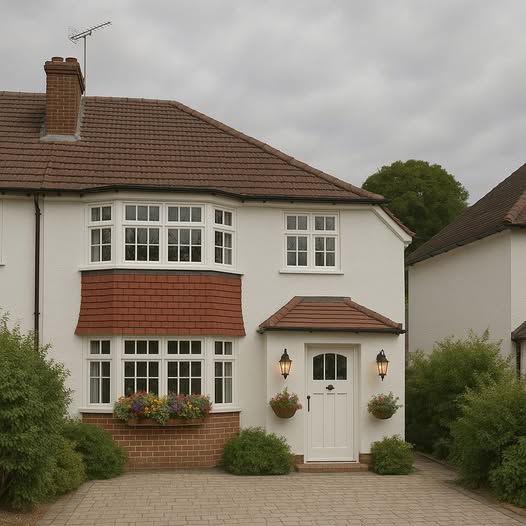
Property: 1930s Solid Brick Semi-Detached
The Objective: Radically improve thermal retention while managing moisture and air quality.
The Challenge
This inter-war property was notoriously hard to heat. More concerning, the homeowners were battling persistent black mould and condensation in the corners of the bedrooms and behind furniture. Traditional, uncoordinated insulation upgrades in solid-wall properties often trap moisture, making damp problems worse.
Our PAS 2035 Approach
This project required our Path B expertise. Our Retrofit Coordinator conducted a detailed ventilation and moisture-risk assessment. We designed a holistic plan that paired heavy-duty insulation with a robust, automated ventilation strategy to ensure the home could “breathe” safely.
Measures Implemented
External Wall Insulation (EWI): Because the property lacked cavity walls, we wrapped the exterior in 90mm of high-performance EPS insulation. We finished it with a weather-resistant, breathable silicone render, completely modernising the home’s appearance.
Ventilation Overhaul: To counter the increased airtightness and solve the damp issue, we installed Decentralised Mechanical Extract Ventilation (dMEV) fans in all wet rooms (kitchen and bathrooms). These run continuously at an imperceptible level, automatically boosting when humidity rises.
Upgraded Heating Controls: We integrated smart thermostats with individual radiator valves to optimise heat distribution.
The Results
EPC Jump: Rating improved from E (48) to B (81).
The Impact: The condensation and black mould were completely eradicated within a week of installation. The property now holds heat for hours after the boiler switches off, saving the homeowners hundreds of pounds a year while providing a remarkably healthier indoor air environment.